
VisualDx
VisualDxMedical
3.977.00 Reviews
- Version
- 7.40.1.2
- Installs
- 100.00K
- Age Rating
- Everyone
Screenshots
Our Review of VisualDx
 Analysis by Appyee
I see VisualDx as a clinical reference for people who already know how to assess a patient, not as an app that can diagnose a problem on its own. Its strongest idea is pairing medical images with diagnostic information: when a presentation is unfamiliar, comparing what you see with documented examples can help you ask better questions and consider possibilities you might otherwise miss. That makes it a more focused tool than a general medical search, though it also means it is not the right starting point for everyone.
Who is likely to get the most from it?
I would put VisualDx on the shortlist for clinicians, medical students, and other healthcare professionals who need a visual reference alongside clinical reasoning. It is especially relevant when skin findings are part of the case, but its medical scope is broader than dermatology. The app is made by VisualDx, has been available since 2011, and is listed as a medical app for everyone; that audience label should not be mistaken for a sign that it is designed to replace a clinician’s judgement.
For a student, the most useful habit is to treat a suggested differential as a study prompt rather than an answer key. I would compare the candidate conditions, note which features distinguish them, then return to the patient’s history and examination. That turns a quick lookup into active learning. A clinician can use the same approach to check whether a less familiar possibility deserves attention without allowing a list of matches to take over the assessment.
A practical way to use the visual reference
Picture a patient arriving during a busy clinic session with a rash whose pattern is not immediately familiar. Instead of searching the web for a single guessed diagnosis, I would first describe the visible features as precisely as possible, then use the app’s image and condition references to compare plausible explanations. The value is not simply finding a picture that looks similar; it is using visual comparison to prompt a more disciplined review of the history, distribution, and other relevant signs.
One useful trade-off is that a close visual match can feel more convincing than it should. Images are examples, not a promise that every patient will look the same, and lighting, skin tone, stage of illness, and image quality can affect comparison. I would use the library to widen or refine my thinking, then check the clinical context rather than treating resemblance as proof. That caution matters particularly when the possible causes have different levels of urgency.
The app is also worth considering as a teaching aid when discussing why two conditions that look alike may lead to different next steps. A learner can compare images, identify what seems similar, and then ask which accompanying symptoms or history would change the differential. This is more useful than memorizing a visual label in isolation, and it makes the resource relevant even when the case is not a routine clinic lookup.
How it compares with familiar alternatives
The usual alternative is a general web search, a textbook, or a broad medical reference. Those can be useful, but a web search often mixes clinical material with pages aimed at patients, while a textbook may be slower to consult during a short appointment. VisualDx’s particular appeal is the connection between visual examples and differential diagnosis, so I would reach for it when the appearance of a condition is central to the question. For a quick medication detail or a topic outside its strengths, a dedicated reference may be the more direct choice.
It is not a substitute for a patient record, a full clinical examination, local guidance, or specialist consultation. Nor would I recommend it as a self-diagnosis tool for someone worried about a new symptom. A person without clinical training may not know which details to enter or how to weigh a possible match, and an app result can create unnecessary alarm or reassurance. In that situation, a qualified healthcare professional is a safer next step.
Access, cost, and everyday friction
The app is free to download, but in-app purchases range from $39.99 to $299.99 per item. I would check the purchase details in the app before relying on a particular resource for regular work, because the free download does not mean every useful component is included at no cost. With a 3.9 average from 457 ratings and 77 reviews, its reception is mixed enough that I would try the available experience first and judge whether it fits my workflow rather than assuming it will suit every practice.
VisualDx has more than 100,000 installs, and the current version is 7.40.1.2; it requires Android 8.0 or later. Those details make compatibility an easy first check before setting it up on an older device. The earlier impression that a stable connection is needed for the full range of features is also worth bearing in mind: I would not make it my only reference in a setting where connectivity is unreliable. If I expected to work offline, I would verify access to the material I need before the moment of care rather than discover a limitation mid-consultation.
What I would keep in mind before relying on it
A common question is whether this is appropriate for someone with no medical background. My answer is that the app’s clinical orientation makes it a poor substitute for medical advice. Another practical question is whether the free download covers ongoing professional use; because paid items are available, I would review the in-app options and costs before building it into a routine. These are not reasons to dismiss it, but they matter when deciding whether it belongs in a personal or workplace toolkit.
I would also avoid opening a differential and then stopping at the first plausible result. A better workflow is to use the app after an initial assessment, compare several reasonable possibilities, and identify what evidence would support or weaken each one. If the case remains uncertain or serious, the next step is further clinical assessment, not repeated searching. That keeps the app in its proper role: a support for informed thinking rather than an authority that makes decisions for you.
Have you ever found yourself down the rabbit hole of trying to figure out a mysterious skin rash or an odd symptom? The world of medical diagnosis can be a labyrinth, but VisualDx is here to help guide you through it. I’ve taken the plunge and tried out this app myself, so let’s dive into what it offers and how it stands out in the sea of medical apps.
What is VisualDx?
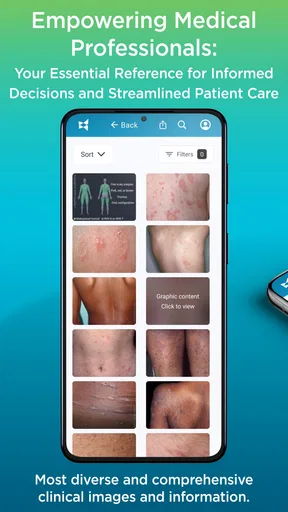
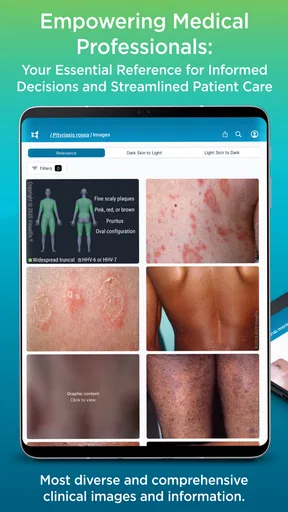
VisualDx is a clinical decision support system designed to assist healthcare professionals in making accurate diagnoses. It’s like having a seasoned medical expert in your pocket, ready to provide insights and support at the tap of a screen. This app stands out with its visual library of over 40,000 images, covering a wide array of conditions across dermatology, infectious diseases, and more.
Getting Started: First Impressions
Downloading and setting up VisualDx was a breeze. Available on both Android and iOS, the app requires a straightforward registration process. The interface is clean and intuitive, which is crucial when you’re trying to focus on patient care. I found the navigation to be smooth, with quick access to its vast library of images and information. The search functionality is robust, allowing you to enter symptoms, diagnoses, or medications to pull up relevant and detailed information.
Features That Shine
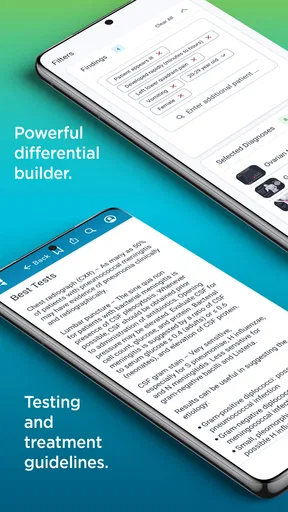
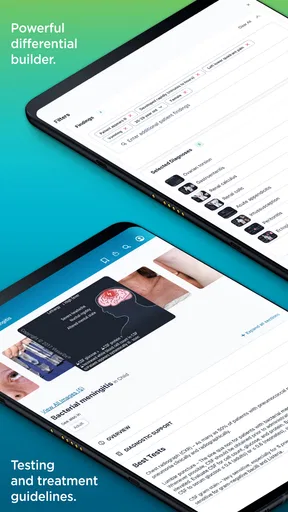
One of the standout features of VisualDx is its differential diagnosis generator. By inputting symptoms and patient history, you can quickly generate a list of potential conditions. This is incredibly useful in narrowing down possibilities and considering less common diagnoses that might be overlooked.
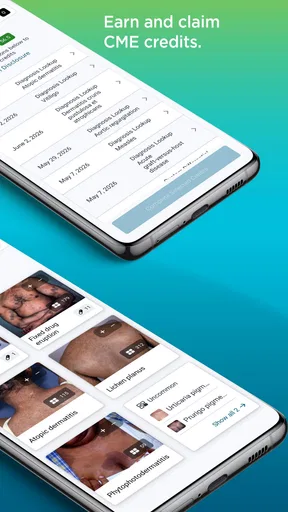
The image library is another highlight. It’s not just about quantity; the quality and variety of images allow for better comparison and recognition of conditions. Whether you’re dealing with a complex dermatological case or a rare infectious disease, having visual references is priceless.
Additionally, the app offers up-to-date information on best practices and treatment protocols. This ensures that you’re not only diagnosing accurately but also providing the best possible care.
Real-World Application
Using VisualDx in a real-world setting brings its benefits to life. Imagine being in a busy clinic with patients presenting a range of symptoms. The ability to quickly access a wealth of information helps streamline the diagnostic process. It’s also a great educational tool, keeping both seasoned professionals and medical students abreast of the latest developments in medical care.
I found it particularly useful in dermatology, where visual comparison is key. The app’s ability to suggest differential diagnoses based on visual patterns is akin to having a mentor guide you through complex cases.
Room for Improvement
While VisualDx is a powerful tool, it’s not without its minor drawbacks. The app requires a stable internet connection to access its full range of features, which might be a limitation in areas with poor connectivity. Additionally, while the app is aimed at healthcare professionals, a simplified version for laypersons could broaden its appeal and usability.
Final Thoughts
Overall, VisualDx is an impressive tool for anyone in the healthcare field. It enhances diagnostic accuracy, speeds up the decision-making process, and serves as a valuable educational resource. Whether you’re a dermatologist, a general practitioner, or a medical student, this app is a worthy addition to your toolkit.
If you’re looking to add a reliable, visually rich resource to your diagnostic process, give VisualDx a try. It’s like having a medical library and a seasoned consultant rolled into one handy app. Ready to explore its features? Check it out on your respective app store and see how it can transform your practice.
Verdict
Strengths of VisualDx
- Comprehensive medical image library.
- Easy-to-navigate user interface.
- Regular updates with new content.
- Cross-platform availability.
- Offline access for remote areas.
Limitations of VisualDx
- Subscription required for full access.
- Large app size may affect storage.
- Limited free content available.
- Occasional slow loading times.
- Requires stable internet for updates.
Similar Picks in This Category
View All
WebMD: Symptom Checker
WebMD, LLC4.1

Microphone Amplifier
DOSA Apps4.2

Anatomy Learning - 3D Anatomy
3D Medical OU4.5

Period Tracker and Calendar
SimpleInnovation4.9

GoodRx: Prescription Coupons
GoodRx4.8

CVS Health
CVS Pharmacy4.5
Frequently Asked Questions
What is VisualDx and how does it work?
VisualDx is a clinical decision support system designed to assist healthcare professionals in diagnosing and treating a wide variety of conditions. It provides an extensive database of medical images and information that can be searched by symptoms, diagnoses, or visual findings. The app helps clinicians make informed decisions by offering differential diagnosis support and treatment options.
Is VisualDx suitable for non-professionals or general users?
While VisualDx is primarily designed for healthcare professionals, such as doctors and medical students, it can also be useful for individuals interested in gaining deeper insights into medical conditions. However, it should not replace professional medical advice and diagnosis. Non-professionals should consult a healthcare provider for accurate medical guidance.
How frequently is the VisualDx database updated?
The VisualDx database is regularly updated to ensure that users have access to the latest medical information and images. Updates are made by a team of experts who continuously review and add new data. This ensures that the app remains a reliable resource for current medical knowledge and practices.
What are the main features of VisualDx?
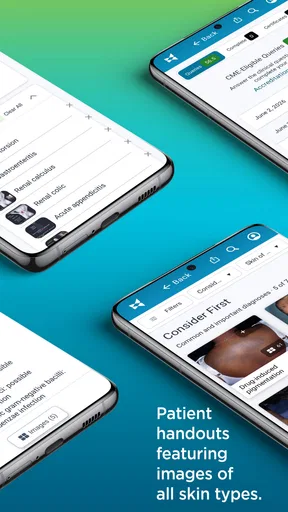
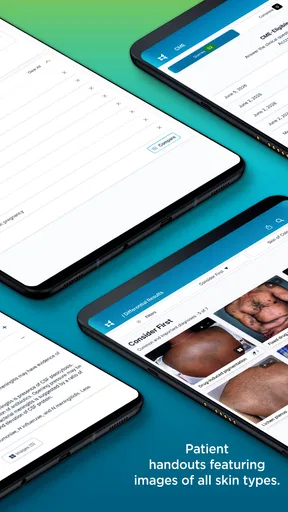
VisualDx offers several key features, including a comprehensive image library, symptom search, differential diagnosis generator, and treatment recommendations. The app is designed to be user-friendly, with an intuitive interface that allows quick access to information. It also includes patient education tools to help explain conditions and treatments.
Is VisualDx available on both Android and iOS devices?
Yes, VisualDx is available for download on both Android and iOS platforms. This ensures that users can access the app regardless of their device preference. The app can be downloaded from the respective app stores, and it often requires a subscription or institutional access for full functionality.
